Wild Rise
The transition from undergraduate study to doctoral research represents one of the most profound shifts in an academic career. For many, the university experience begins with the immediate pressure of relentless deadlines, where the primary objective is mastering the art of the weekly submission. This foundational stage is not merely a box-ticking exercise; it is an essential period for building the intellectual stamina and organizational discipline required for higher-level research.
As students progress through their degrees, the nature of their work undergoes a significant evolution. They move from a reactive state—simply completing tasks prescribed by a professor—to a proactive state, where they must identify their own research questions and defend their findings. Navigating this path effectively requires a strategic approach to assignment help to ensure that the heavy baseline workload is managed efficiently without sacrificing long-term aspirations. By understanding how to balance these immediate responsibilities early in your academic life, you gain a massive advantage when the time eventually comes to step into the world of complex, original research.
The Undergraduate Foundation: Why Consistency Matters
At the undergraduate level, academic success is almost always a measure of consistency, adaptability, and organization. Students are frequently required to juggle multiple modules simultaneously, each carrying its own distinct set of requirements, research expectations, and strict submission deadlines. It is a vital period of “information gathering,” where you consume existing knowledge to build your own understanding of a discipline and develop a unique analytical perspective.
The most common mistake students make is viewing each assignment as a standalone, disconnected hurdle. Instead, it is much more productive to view these tasks as training exercises. By mastering the structure of a standard essay, lab report, or case study, you are building the “cognitive muscle” required for more complex future projects. If a particular module becomes overwhelming, seeking external support can act as a crucial bridge. This allows you to focus on truly understanding the core theoretical concepts rather than just scrambling to finish the word count or worrying about formatting nuances.
Essential Skills for the Modern Student
| Skill | Description | Impact on Academic Growth |
| Time Management | Mapping out semester deadlines and breaking big tasks into phases. | Dramatically reduces burnout and improves the quality of final output. |
| Critical Reading | Analyzing academic sources rather than just summarizing them. | Essential for building a unique thesis and defending arguments later. |
| Drafting & Refining | Treating writing as an iterative process, not a one-time event. | Significantly improves clarity, flow, and coherence in long-form writing. |
| Resource Utilization | Leveraging mentors, libraries, and peer support networks. | Ensures you aren’t working in isolation and have access to diverse perspectives. |
The Shift to Doctoral Research
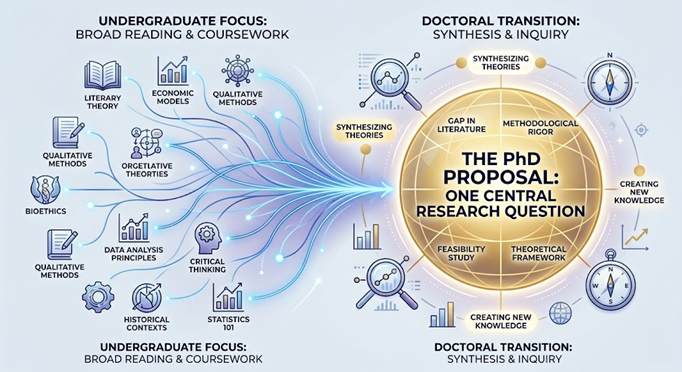
Once you advance into postgraduate work, the academic dynamic changes entirely. You are no longer just a consumer of knowledge; you are becoming an active producer of it. This is where the daunting challenge of the PhD proposal arises. A proposal is not simply another paper; it is a formal promise to the academic community that you have identified a genuine gap in existing research and that you possess the methodological rigor to fill it effectively.
This process is inherently more isolating than undergraduate coursework and requires an exceptional level of self-direction. While you will have a supervisor, the burden of proof and the creative drive rest entirely on your shoulders. Many scholars find it incredibly beneficial to consult with a phd proposal writing service during this critical stage. At Myassignmenthelp, experts frequently emphasize that a successful proposal is not just about the brilliance of your underlying idea; it is about proving the feasibility and the necessity of that idea. You must demonstrate that your proposed research is structured, timely, and deeply grounded in a sound theoretical framework that can withstand peer scrutiny.
The Evolution of the Academic Voice
Throughout this journey, your “academic voice” will begin to mature. In your early years, your writing might focus on summarizing what others have said. As you reach the final stages of your education, your writing must shift to focus on synthesis—taking disparate ideas and weaving them into a new, compelling narrative.
This shift does not happen overnight. It is the result of years of practice, feedback, and refinement. Every time you write an essay, you are practicing the art of argumentation. Every time you read a peer-reviewed journal article, you are learning how experts organize their thoughts and evidence. When you reach the stage where you are designing your own research, you will find that these past experiences provide the necessary context to navigate complex methodological challenges.
Bridging the Gap: Maintaining Academic Integrity
Regardless of the level of study, the absolute cornerstone of all academic work is integrity. As you move from undergraduate assignments to doctoral-level work, the expectations regarding originality, citation, and ethical research grow exponentially.
To maintain high standards throughout your academic career, consider these two pillars of research:
- Transparency: Always acknowledge the sources that have influenced your thinking. Whether you are using a citation manager or manually organizing your bibliography, keep meticulous track of where your ideas come from. Never attempt to pass off another’s work as your own; instead, use others’ work as a foundation upon which to build your own contributions.
- Originality: Even when you are reviewing established theories, your own voice must come through clearly. Use your assignments as safe opportunities to experiment with your writing style and analytical voice, so that by the time you reach the PhD level, you are fully comfortable defending your own arguments in front of a committee.
The journey from your very first essay to your final thesis is a long, rewarding process of intellectual maturation. It is not about knowing all the answers at the start; it is about learning how to ask the right, difficult questions and having the patience to follow them to their logical conclusion.
Frequently Asked Questions
Q.1. How do I balance multiple deadlines without compromising the quality of my work?
Ans: Prioritization is absolutely key. Use the Eisenhower Matrix to categorize your tasks by urgency and importance. By tackling the most cognitively demanding tasks during your peak productivity hours, you can manage a heavy workload without burning out or sacrificing the depth of your research.
Q.2. Why is the PhD proposal stage often considered the most difficult part of doctoral studies?
Ans: It is challenging because it requires a fundamental transition from being a student to being an independent researcher. You are moving from a world with clear instructions and deadlines to a world of open-ended inquiry where you must justify the necessity of your research to an expert audience.
Q.3. Is it common to seek external help during my studies?
Ans: Yes, it is entirely common. Academic support is a standard and healthy part of the global educational ecosystem. Whether it is visiting your university’s writing center or using professional guidance to refine your structure, seeking help is a sign of a student who is proactive about their performance and deeply committed to academic excellence.
Q.4. How can I ensure my writing style is “global” and professional?
Ans: Focus primarily on clarity, precision, and conciseness. Avoid overly complex jargon if a simpler, more direct term is available. Ensure your arguments are logical, evidence-based, and that your tone remains neutral, objective, and scholarly throughout your entire document.
About The Author
I am Alexander Anderson, a senior academic consultant and digital content strategist. With over a decade of experience in higher education, I specialize in helping students navigate the complex transition from undergraduate coursework to advanced doctoral research. My work focuses on synthesizing pedagogical best practices with modern digital tools to streamline academic productivity.